
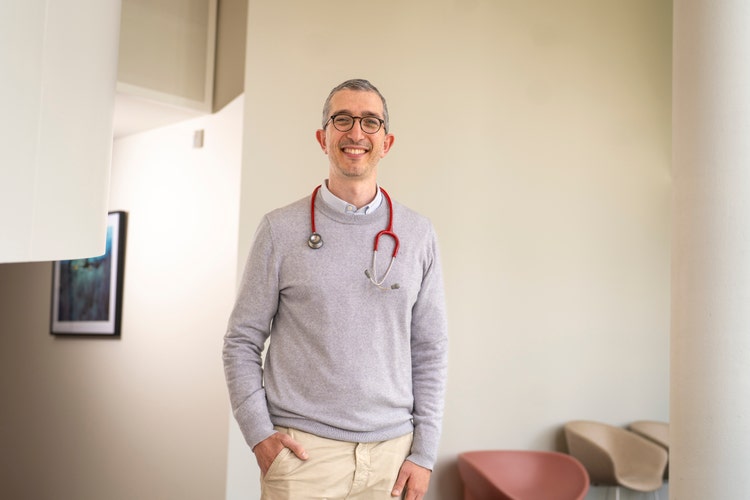
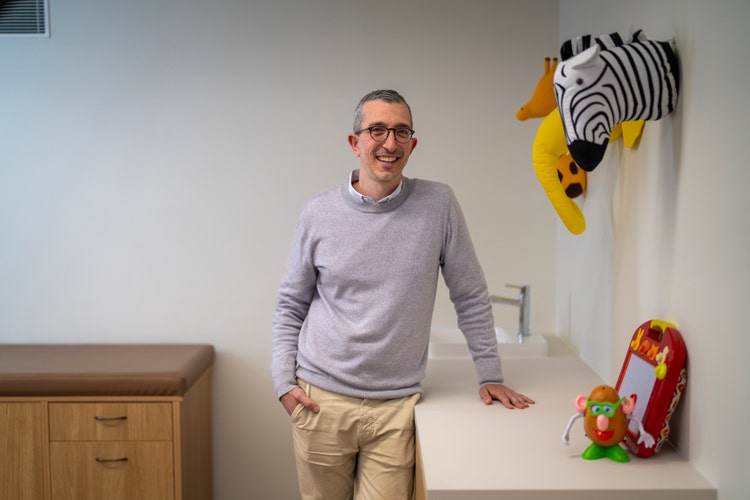
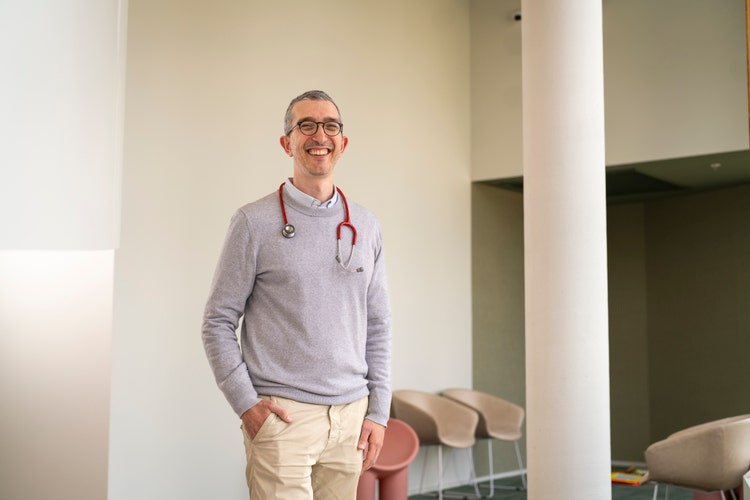
According to Dr Eli Shmerling, almost everyone in paediatrics works part-time in private practice. So, during his training, Dr Shmerling was aware that he would be doing some work out in the community as well as hospital work.
Ever the forward planner, Dr Shmerling made sure his training involved community work to better prepare himself. But community paediatrics is a completely different beast. ‘In the hospital, you're seeing kids who are acutely unwell,’ he explains.
‘They've got asthma or an infection, or have had a seizure, or something medically wrong has happened to them. Whereas in the community, it's often mental health, learning difficulties, autism, ADHD, challenges with the social components of their life or challenges with the schooling components of their life.’
What Dr Shmerling also wasn’t prepared for in community paediatrics was the isolation, which was only amplified by starting his work in the community the same time the pandemic hit. ‘I quickly realised that working as a paediatrician in the community was pretty siloed and lonely,’ he says.
‘You were looking after these complex patients and families by yourself, and families were having to navigate a complex system where they were often seeing me and other therapists, like a psychologist, or a speech therapist, or an occupational therapist, and working out how to do that all by themselves.’
A passion for paediatrics
For Dr Shmerling, the desire to be a doctor when he was growing up was always intertwined with wanting to work with kids. His father was a GP, and his mother was a paediatric speech therapist who operated clinics out of their front room. ‘My Mum was really passionate about working with kids and shifting their trajectory, and so it always lingered in the back of my mind,’ he recalls.
‘There was something about their passion and their joy for their work that had a big influence on my interest in working in that space. I went to medical school and from my first exposure to paediatrics, I fell in love with it. I loved how innocent kids are; they're so quirky in the way that they express themselves, so honest, and so raw.’
He went through medical school at Monash University in Melbourne and moved into the Victorian paediatrics training system, which rotates people through various hospitals around the state. ‘You know when you're in a work environment where it just feels right for you? It just felt like that from day one,’ he says.
‘I also really value the ability to support parents and families when they're really stressed. I feel like that's something that comes naturally to me, just being able to be a calming influence, and holding their hand through the process. I found that very rewarding.’
A shared vision for better care
Around his time in the community, Dr Shmerling met a fellow doctor in training, Dr Kenny Yeoh. They soon realised they shared a vision of how community care could work.
‘We both had this brainchild of having a clinic where we could work alongside people who were doing similar work and also be part of the team. So, if I had a patient who had autism, for example, they might see a speech therapist for help with their social communication, and a psychologist for help with their anxiety, and an occupational therapist for help with their sensory issues. Instead of having all those services separate, there'd be a more contained team approach that would be under the one roof. And that was where the thought process around the clinic was consolidated.’
Building a home for collaborative care
With their vision of efficient community care clear in their minds, it was time to make it a reality – which is easier said than done. It was clear they needed to invest a fair bit of money, and they were sure they wanted to own the space they were in. Initially they liked the idea of converting an old residential property, but planning laws made that too difficult. ‘That led us down the path of buying a commercial space. And I'm glad we did, because we got a much bigger, more dynamic space as a result,’ he says.
While Dr Shmerling and Dr Yeoh weren’t total novices in terms of borrowing money, they didn’t realise the amount of detail they’d need to prove the viability of their plans. ‘It was a bit of a surprise to us that we were being pushed so hard on so much of the minutiae of the project, but it was actually an awesome exercise. We learned a heap about that process from go to woe.’
Their accountant introduced them to BOQ Specialist’s Ursula Coetzee to get started. ‘Ursula was incredible and very patient in guiding us through that journey as well.’ Lucky for them, the project was considered viable and financially responsible, and the pair weren’t knocked back at any point.
A milestone worth the effort
After 9 months of planning and building, Caring For Kids opened its doors in March 2023. While some may dwell on the stresses of the building process, Dr Shmerling believes in some ways they’re beneficial. ‘Running a business is pretty stressful,’ he says. ‘So, I think it prepares you for some of the stresses that come with that.’
Supporting the journey to practice ownership
When Dr Eli Shmerling sought alternative financing with Dr Yeoh, BOQ Specialist's Ursula Coetzee noticed their dissatisfaction with other banks' generic services. BOQ Specialist stood out by offering tailored financial products, including commercial mortgages and escrow facilities designed specifically for medical professionals.
‘We offer a commercial mortgage to enable the purchase of the premises and then escrow facilities for when it comes to doing the actual fit-out of the premises, which is something that not all banks offer,’ Ursula explains. ‘It is a unique product designed specifically for the needs of medical professionals.’
But the key is also understanding what clients are going through. ‘When clients embark on projects like this, it's something completely new to them,’ she says. ‘It's often the first time they're doing it, so they've got no idea how the whole process works. So, it's really important that you run through all the elements of what is required in terms of how the finance works, what the options are that you have available to them, and why the products that we've got are designed the way they have been designed.’
Planning the next chapter for your business?
Discover how commercial property finance can help eligible professionals purchase and customise their own space.
You may also be interested in:{yellow-border}
Dr Ken Tan’s growing business
From launching Canberra's first dedicated fetal assessment service to planning his next expansion, Dr Ken Tan shares how vision, persistence and trusted support have fuelled his business growth.
Dr Claire Demeo on preparing for her career
A chance meeting at a medical student conference became the start of a lasting relationship with BOQ Specialist, supporting Dr Claire Demeo throughout the early stages of her medical career.