Final year medical student at the University of Western Australia, Riorden O’Shea, travelled to Vietnam to complete his elective.{yellow-border}
Travelling to Ho Chi Minh City, a densely populated city of over 9 million people, Riorden saw firsthand the stark contrast between the health care systems in Vietnam and Australia and the potentially harmful consequences of relying solely on traditional medicine.
Emergency department
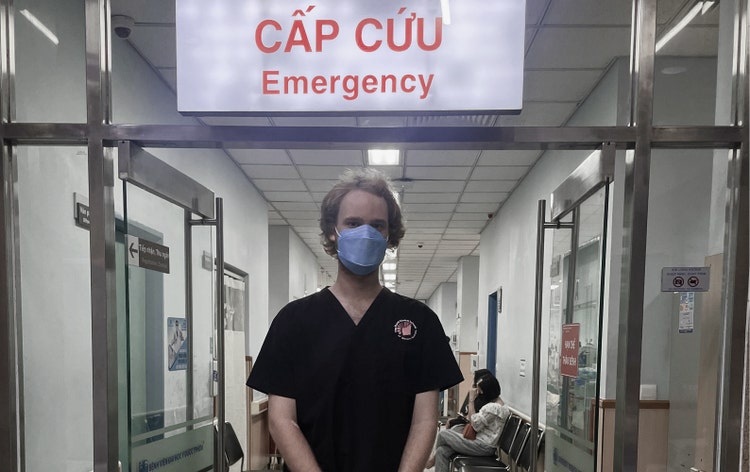
The University Medical Centre (UMC) is associated with the University of Medicine and Pharmacy Ho Chi Minh City, with most of its doctors being local graduates. The ED at UMC has 50 permanent beds, with an extra 50 stretchers for overflow and temporary treatment of patients. UMC has a positive reputation amongst local citizens and as a result is constantly busy.
Access and cost of health care
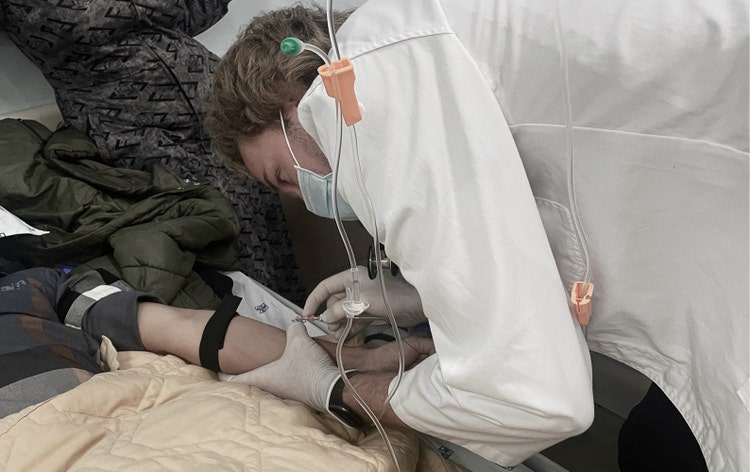
The most obvious difference when comparing the Australian and Vietnamese health care systems is the access to and affordability of health care. In Vietnam, family doctors (i.e., General Practitioners), are exceedingly uncommon. For many, this means presenting to the emergency department is the only way to see a doctor or nurse. Health care comes at a cost to the patients, with payments being due upfront.
Significant costs and long waiting times means many patients do not present until it is absolutely required and therefore, their prognosis is often poor. Many patients we saw in ED were critically unwell, to the point of requiring an ICU admission. On average, one night in ICU, excluding the additional costs associated with diagnostic tests and treatment, can cost a patient more than their families combined monthly income. Most patients cannot afford the health insurance that would at least partially cover these medical expenses.
For those who live outside the city, the situation is far worse. Some patients make costly and time-consuming trips into the city for medical care, due to a lack of access to "country doctors" or a perception that they are inferior. The outcomes for these patients are even worse.
Traditional medicine
Traditional medicine plays a large role in recovery for many Vietnamese people, with the majority preferring these therapies over western medicine. Lack of efficacy, adverse effects, or the effects of unknown substances mixed in with these medicines, can lead patients to develop life-threatening complications.
Conclusion
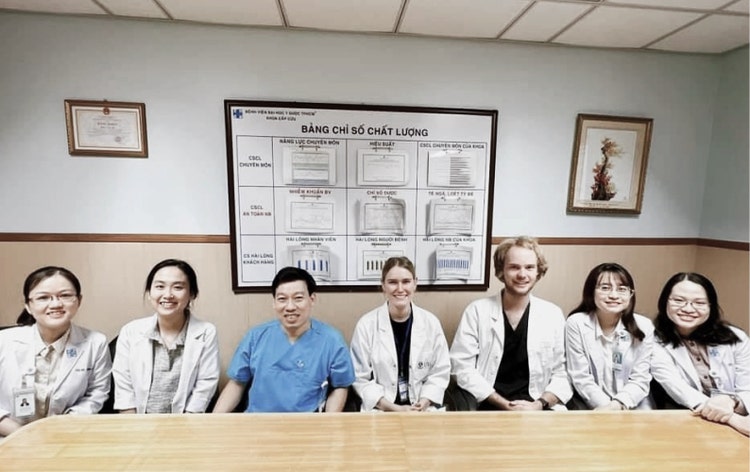
During my time at UMC I saw severely septic patients and patients suffering from respiratory, kidney, liver, and heart failure. Strokes, hypertensive crises, and severe diabetic complications were also very common. It was amazing to learn from such experienced doctors, observing how they managed these conditions with such late presentations in a timely and efficacious way. I am extremely grateful for the opportunity to discuss with patients, and their families, their conditions and gain insight into their health literacy and outlook on life. I am very appreciative for the opportunity to complete an elective with the UMC, and of course, thankful to the BOQ Specialist FutureFocus grant for providing financial support towards my elective. This was an incredible learning experience and I look forward to applying what I have learnt in my future practice in Australia.